.svg)
.svg)

How thick should a concrete driveway be
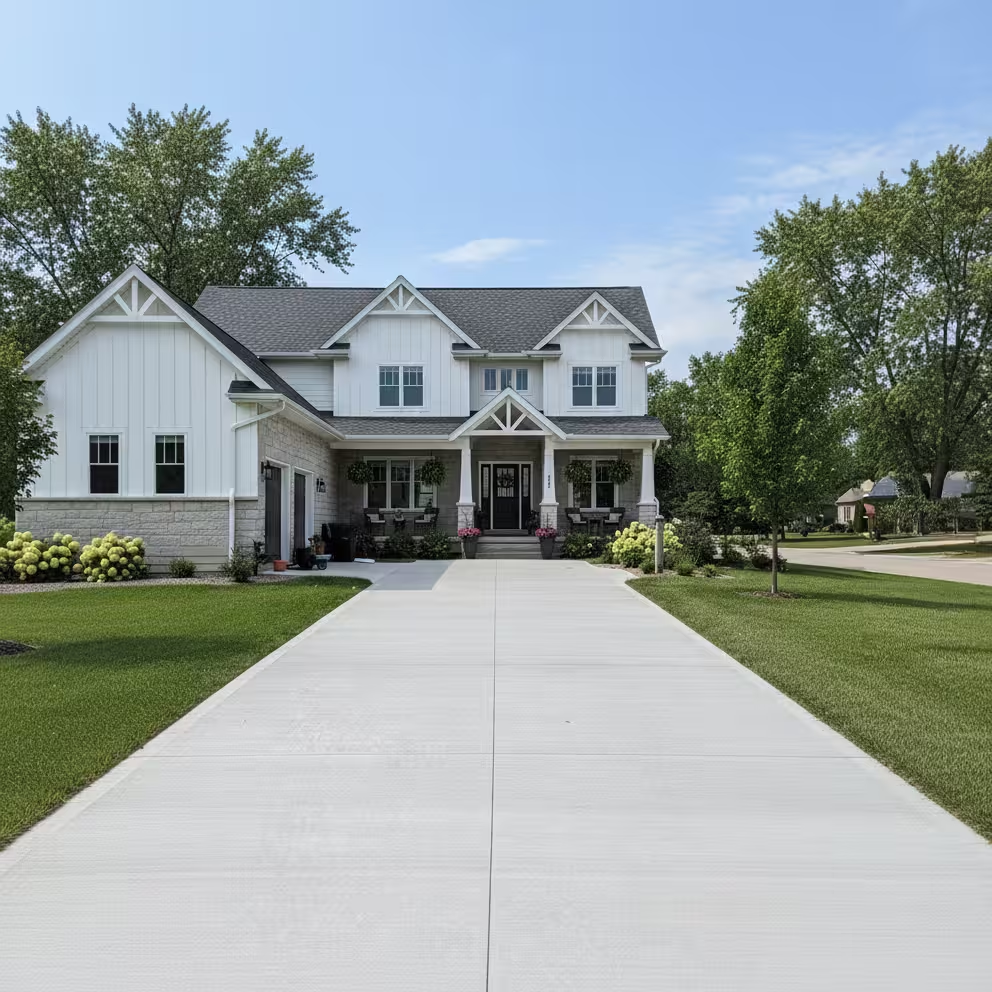
Getting the thickness of your concrete driveway right is one of the most critical decisions in any paving project. A driveway that is too thin will crack and deteriorate within just a few years, while one that is unnecessarily thick wastes money on extra materials. Understanding the right thickness for your specific needs helps you build a driveway that lasts for decades.
Thickness alone does not determine how long your concrete driveway will last. The quality of the subbase beneath the slab plays an equally important role in preventing settlement and cracking. A well-compacted gravel subbase that is four to six inches deep provides proper drainage and evenly distributes the load placed on the concrete above. Without adequate subbase preparation, even a six-inch slab can develop structural problems within a few years of installation.
Climate is another major factor that influences the ideal driveway thickness for your property. In regions that experience freeze-thaw cycles, concrete expands and contracts with temperature changes, which puts extra stress on the slab. Homeowners in colder climates should consider pouring their driveway at five inches and adding reinforcement such as wire mesh or rebar. Proper control joints spaced every eight to ten feet also help manage where cracks form so they remain hidden within the joint lines rather than spreading across the surface.
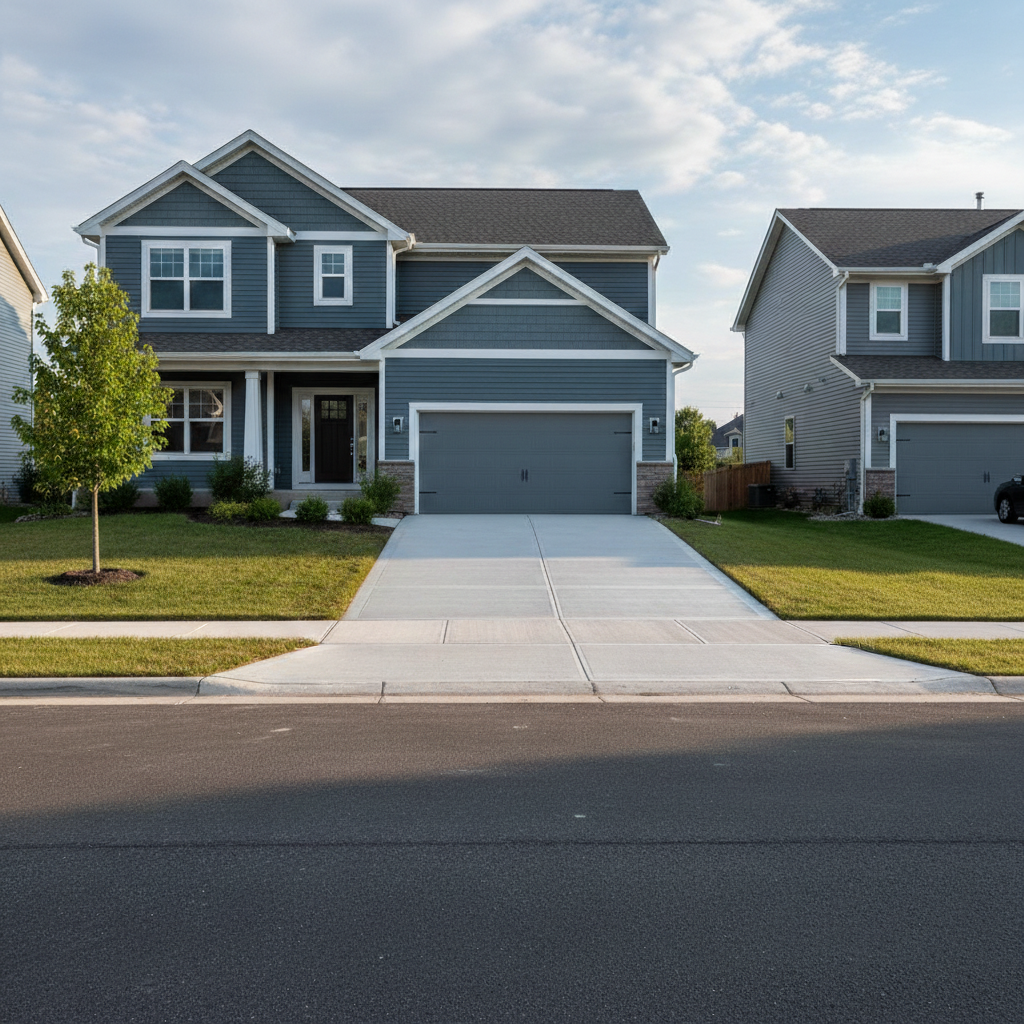

Many homeowners wonder whether asphalt or concrete is the better choice for their driveway. While asphalt driveways are cheaper upfront, they typically need resealing every three to five years and have a shorter overall lifespan. A properly poured concrete driveway with the right thickness can last 30 years or more with minimal maintenance. When you factor in long-term repair and replacement costs, concrete often proves to be the more economical investment.
Applying a high-quality concrete sealer after the slab has fully cured is one of the best ways to extend the life of your driveway regardless of thickness. Sealcoating protects against moisture penetration, oil stains, and surface wear caused by vehicle traffic and weather exposure. Most professionals recommend reapplying sealer every two to three years to maintain optimal protection. Combining the right thickness with proper sealing and routine maintenance gives your concrete driveway the best chance of lasting a lifetime.
Trust the experts at MCM Concrete!
Whether you are laying a new cement driveway or replacing an aging slab that has started to crack, the team at MCM Concrete has the experience to get every detail right. We assess your soil conditions, traffic requirements, and local climate to recommend the ideal slab thickness and reinforcement for your property. From subbase preparation to finishing and sealcoating, we handle every step of the process so you can enjoy a durable, attractive driveway for years to come. Contact us today for a free estimate on your concrete driveway project.